The Camino Sanabrés is a variant of the Vía de la Plata (Silver Route), entering Galicia from the province of Zamora in Castile-León. The Galician portion of the Sanabrés has seven stages totaling nearly 200 kilometers (125 miles).

The Camino Sanabrés is a variant of the Vía de la Plata (Silver Route), entering Galicia from the province of Zamora in Castile-León. The Galician portion of the Sanabrés has seven stages totaling nearly 200 kilometers (125 miles).
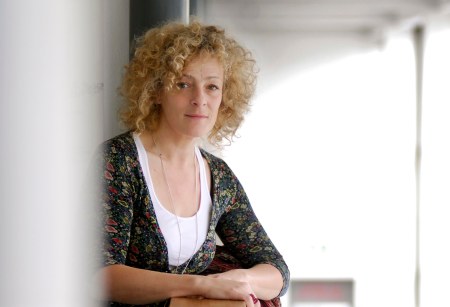
[prose] Teresa Moure is one of Galicia’s most accomplished writers. She is the author of five novels, the most famous of which is Black Nightshade, which received numerous accolades when it was first published, including the Xerais Prize for best novel.

[art] Berta Álvarez Cáccamo (Vigo, Pontevedra) is a Galician painter linked to the Atlantic Group, a movement of Galician artists created in 1980 with the aim of reviving Galician visual arts.

[poetry] The identity of troubadour Martin Codax (Vigo) is essentially synonymous with his seven surviving Cantigas de Amigo, written in Galician-Portuguese, the dominant vernacular literary language of medieval Spain.

As you leave Madrid and traverse the Castilian meseta, dark-blue mountains rise slowly before you. John Barlow wrote in Everything But The Squeal that when you cross these mountains you cross not only a geographical boundary but also a cultural boundary. Beyond lies Galicia, a land of dualities. Sea and land. Coast and mountain. Village and city. Sun…

[prose] “I use the Galician Language as a literary language because I have a forked tongue, however not all the creatures with a forked tongue are bad. I think that all stories and poems are messages written in ink, spittle or blood, that we throw into space wishing that somebody receives them.”
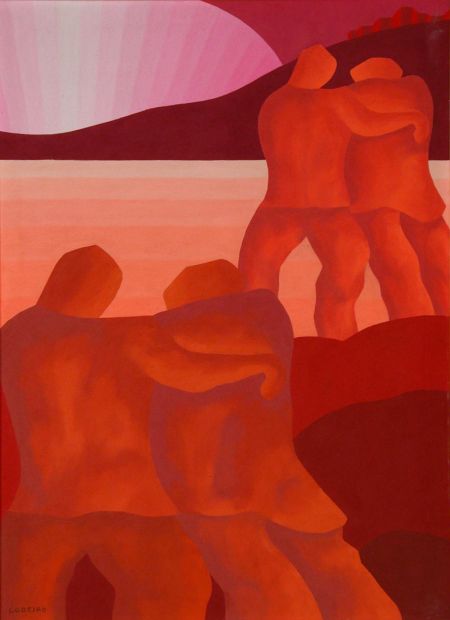
[art] “I think my paintings are beautiful, lonely, and serious.” ~ Xosé Lodeiro (Vigo).
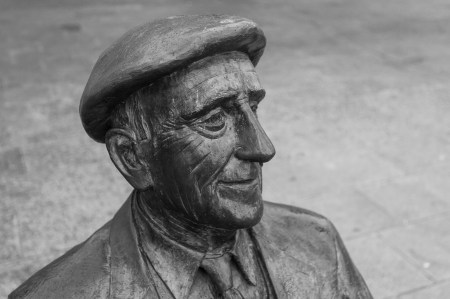
[poetry] Ramón Cabanillas (Cambados, Pontevedra) was considered the link between the Rexurdimento and twentieth century modernism in Galician literature.

‘This man who comes here with us–rise to your feet and greet him warmly, for the Apostle has performed a most marvelous miracle for him, saving him from the gibbet where he had been hanged.’
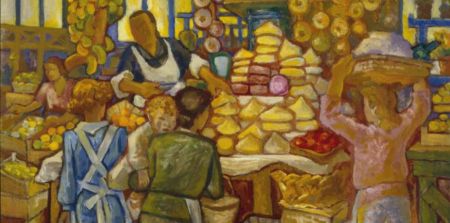
Carlos Maside (Pontecesures). 1950.
 O Faro